Propagation for Beginners
How Roots Develop on Cuttings: From Callus to Root System
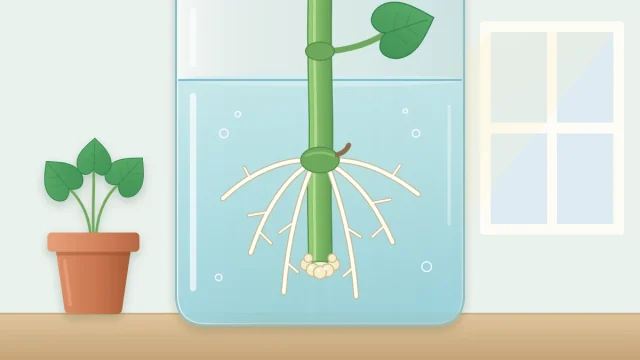
What is happening at the cut end while you wait: the wound seals, callus may form, root initials appear and the first white roots branch into a root system.
Simple Plant Propagation Guides and Techniques
Propagation methods differ from plant to plant. These guides explain each method in plain steps and say which plants it suits.
New to propagation? Read these four guides in order.
What propagation is, the main methods in plain words, and how to tell which one fits your plant. Includes two gentle first projects and honest expectations about speed and failures.
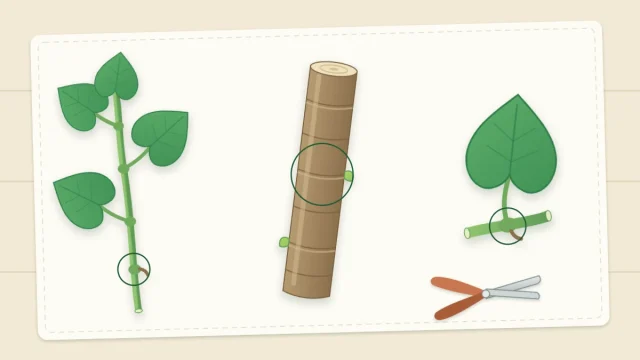
A node is the point on a stem where a leaf attaches, and many cuttings cannot grow without one. Learn how to spot nodes, tell a leaf stalk from a stem, and where to place the cut.
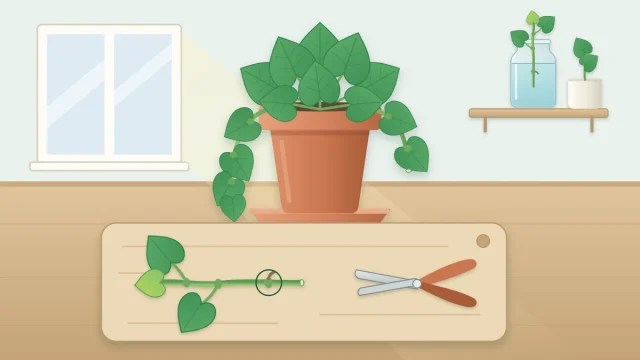
The exact steps for a first stem cutting: which houseplants suit the method, where to cut in relation to the node, which leaves to remove and where to root the piece afterward.
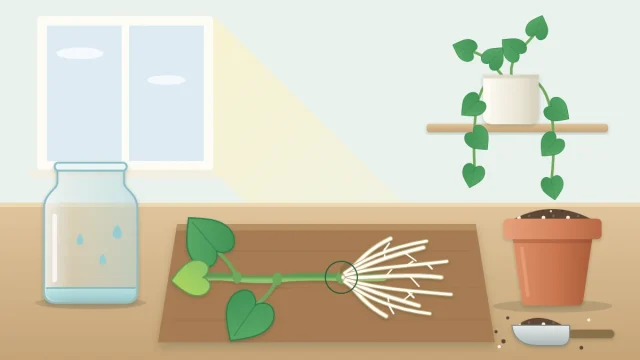
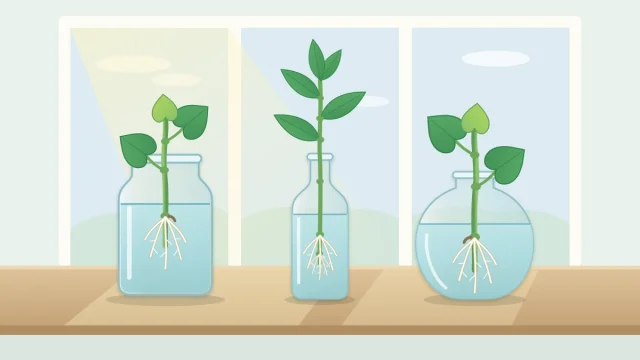
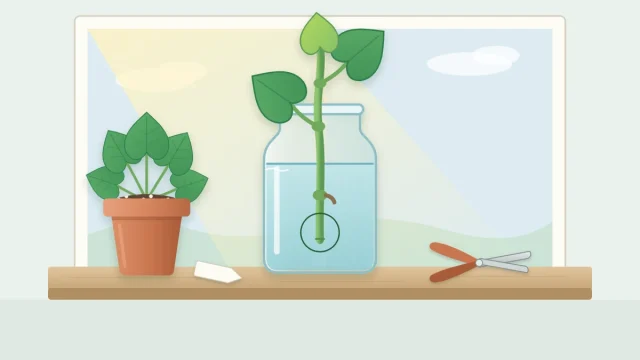
A step-by-step guide to rooting a cutting in a jar of water: where the node goes, how to keep the water fresh, what root growth looks like at each stage and how to tell when it is time for soil.
What a node is, which tools are worth having and how to choose a method for the plant in front of you.
What is happening at the cut end while you wait: the wound seals, callus may form, root initials appear and the first white roots branch into a root system.
How to cut a stem without crushing it and how to clean your blades between plants, so a cutting starts with a smooth wound and a clean tool.
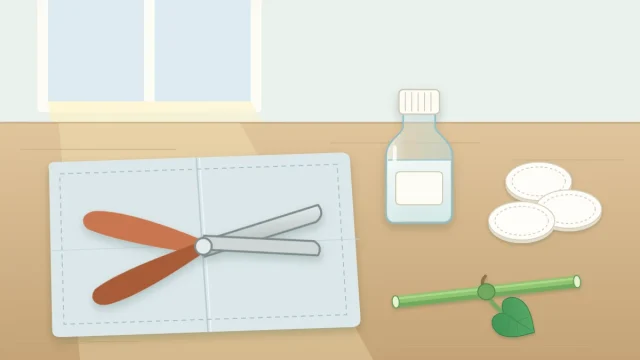
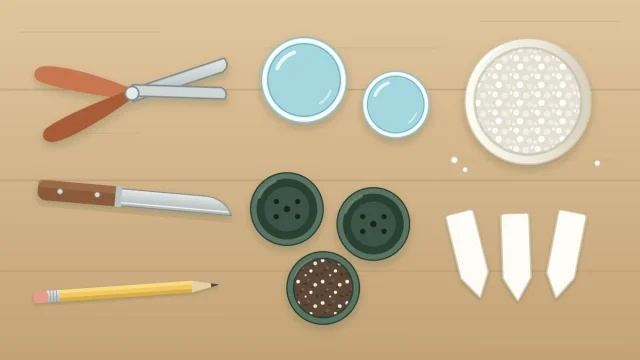
An honest kit list for propagating houseplants, sorted into essential, useful and optional, with the reasons small containers work better and the items you can skip.
Where to cut, how many nodes to keep and how to look after a cutting while it roots.
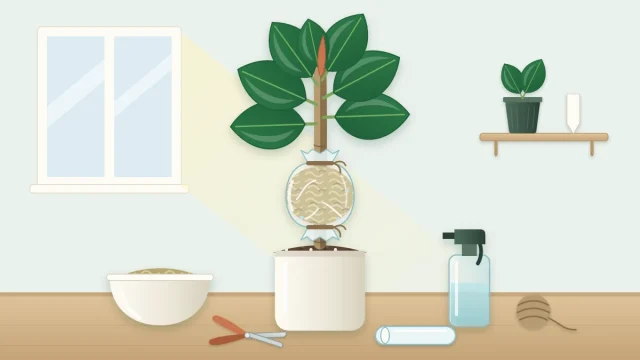
Air layering makes roots form on a stem while it is still attached to the parent. Here is which thick-stemmed houseplants it suits, how to wound and wrap the stem, and when to cut.
Tip cuttings, cane sections and single-node cuttings explained: what each one includes, which houseplants it suits and how to set it the right way up.
The exact steps for a first stem cutting: which houseplants suit the method, where to cut in relation to the node, which leaves to remove and where to root the piece afterward.
Plants that can grow from a single leaf, plants that cannot, and how to tell them apart.
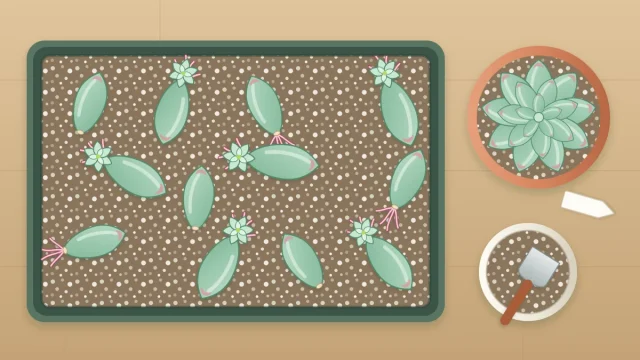
Turn fallen or plucked succulent leaves into new plants: which succulents grow from a leaf, how to remove it whole, why it is dried first and when to begin watering.
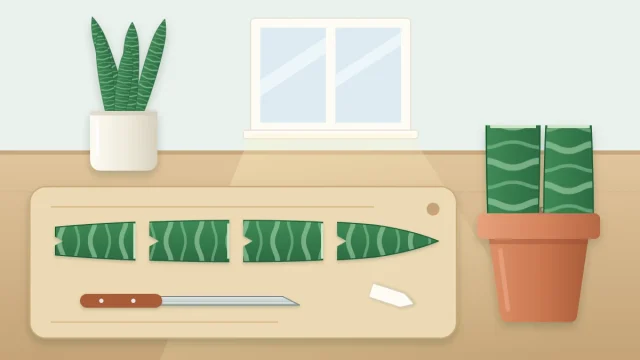
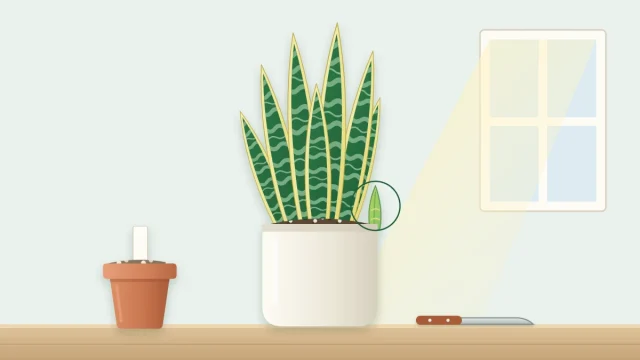
A few houseplants regrow from pieces of leaf blade. Learn which ones, how to cut and set snake plant sections the right way up, and how begonia wedges and cape primrose leaves differ.
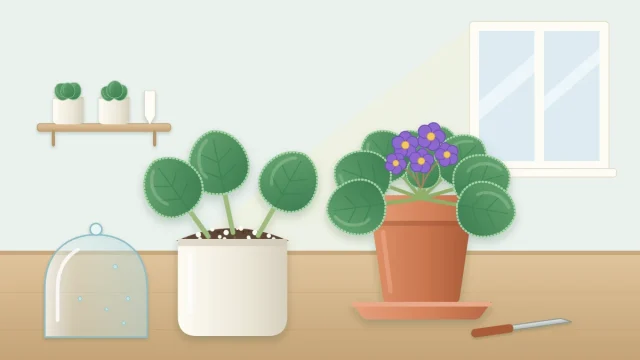
How to grow new plants from one whole leaf and its stalk: the short list of houseplants this suits, the steps for an African violet leaf, and what to expect as plantlets form.
Splitting clumps, separating offsets and potting up each piece with its own roots.
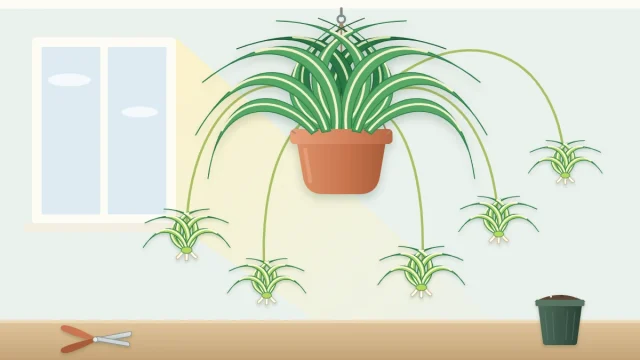
Spider plants, strawberry begonias, mother of thousands and piggyback plants grow miniature copies of themselves. Here is how to root those plantlets, attached to the parent or detached.
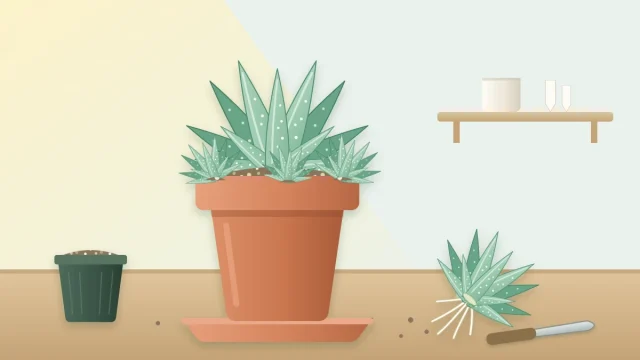
Aloe, haworthia, snake plant, pilea and bromeliads all make baby plants at their base. Learn how to tell when a pup is ready, how to cut it free and how to pot succulent and leafy pups differently.
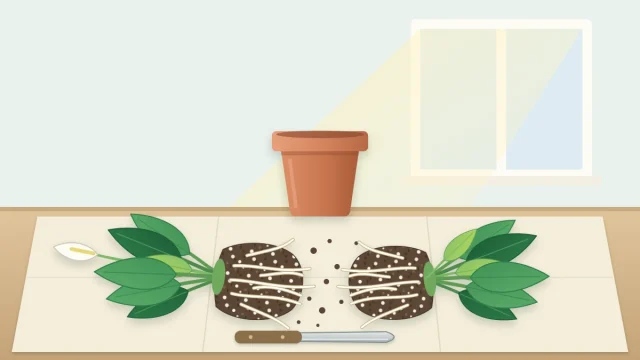
Find out which houseplants can be split and which cannot, then follow clear steps to take a crowded clump out of its pot, separate the crowns and settle each division into its own pot.
Rooting cuttings in a jar: setting it up, changing the water and moving the cutting to soil.
How to pot up a cutting that rooted in a jar: how developed the roots should be, how to fill mix around them without breakage, and how to care for the plant while it adjusts to life in a pot.
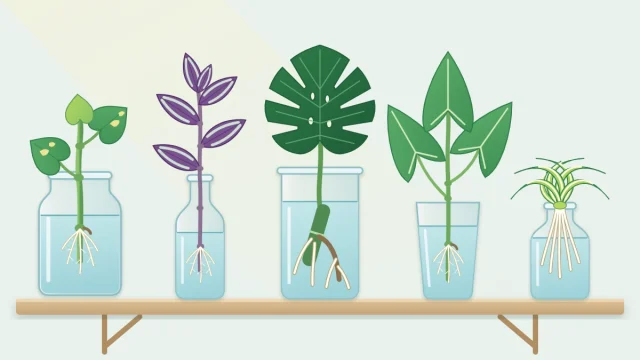
A plant-by-plant look at water rooting: the houseplants widely rooted in a jar, the ones that are slower or less reliable, and the poor candidates that need division, gritty mix or air layering.
A step-by-step guide to rooting a cutting in a jar of water: where the node goes, how to keep the water fresh, what root growth looks like at each stage and how to tell when it is time for soil.
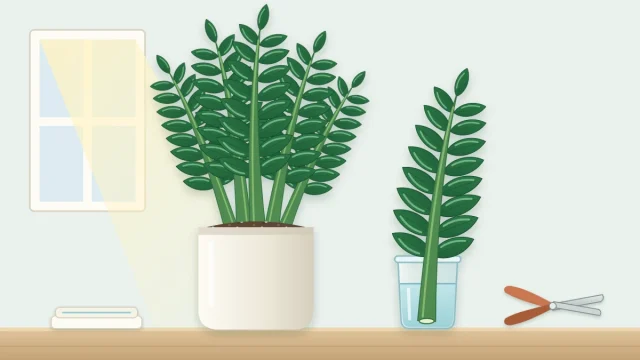
A ZZ plant grows from underground rhizomes, which is why division is the quickest way to a second plant. Stalk and leaflet cuttings also work but are very slow. Here is how to do each and what to look for.
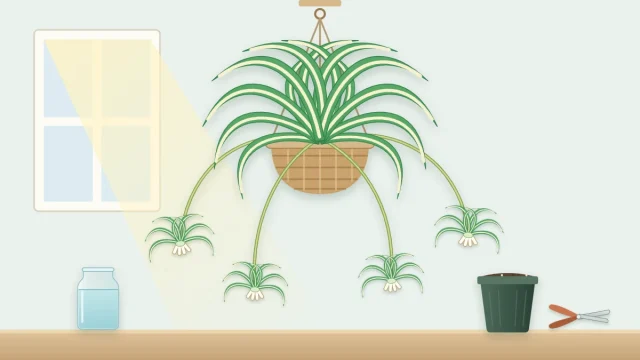
Spider plant babies root readily when you pick ones with root nubs at the base. Here are three ways to root them, how to divide a crowded clump, and why some plants make no plantlets.
Dividing a snake plant gives a sizable plant that keeps its yellow edge, while leaf sections are slow and usually come back plain green. Compare both methods and follow the division steps.
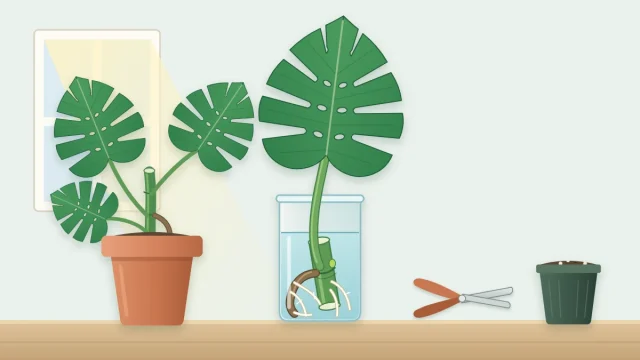
A monstera cutting needs a piece of stem with a node, not just a leaf and its stalk. Learn how to read the stem, where to cut, how to root the cutting in water or moss, and when air layering is the gentler choice.
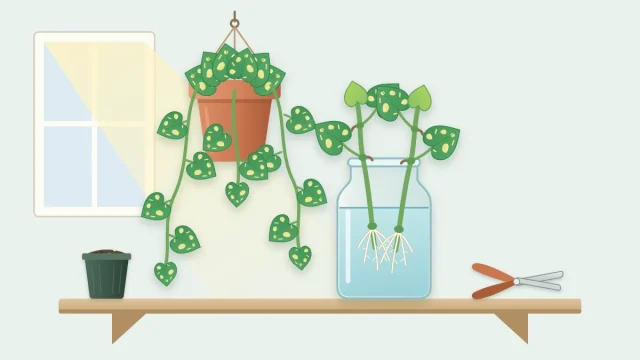
Pothos grows new plants from stem cuttings that include a node, rooted in water or in moist mix. This guide shows where to cut, what will not work, and how to use rooted cuttings to fill out a thin pot.
A cutting that stays green but shows no roots is often just slow. Here are the checks worth making, from the node and the water line to warmth, light and season, and how to tell when to keep waiting.
Every guide is listed on one page, from stem and leaf cuttings to division, water and soil propagation and common problems. All of them are free to read, with no sign-up needed.